
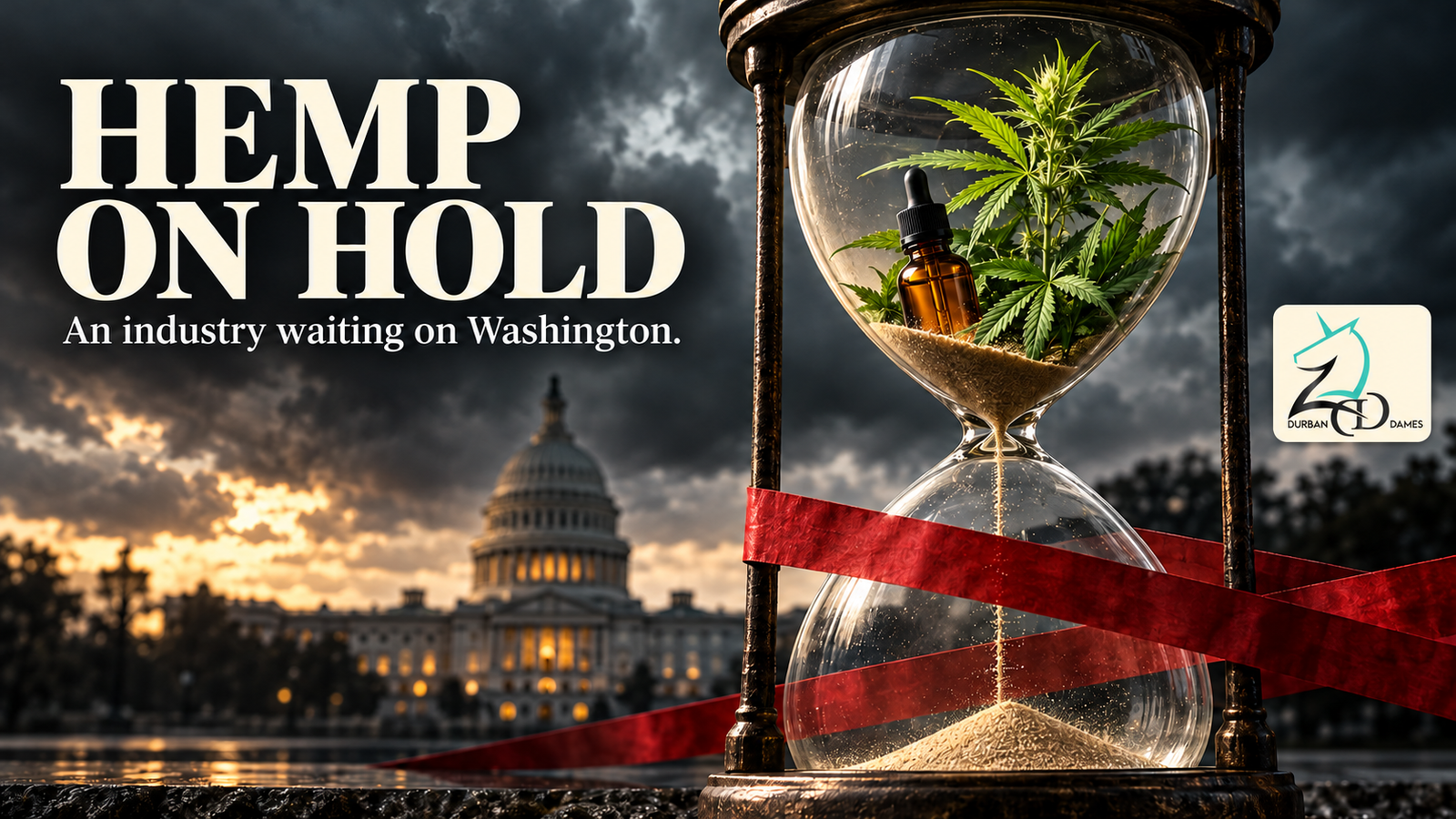
Hemp Is at a Crossroads: What Has Changed and What Hasn’t
October 28, 2026
The hemp industry is in a waiting period. Businesses and customers are watching Washington for decisions that could affect which hemp products remain available and how they can be sold.
Federal changes have already been passed, but major parts have not taken effect yet. Lawmakers are considering other approaches, including further delays and new rules for hemp products. Until another law passes, businesses must prepare for the deadlines already in place.
Where things stand today
Most of the new federal hemp restrictions are scheduled to take effect on December 11, 2026, following a delay from November 12.
These changes include moving from a delta-9 THC standard to a total THC standard, which includes THCA. Finished hemp cannabinoid products would also face a limit of 0.4 milligrams per container for combined total THC and certain other cannabinoids with similar effects. That limit applies to the container—not each serving.
A separate restriction on products containing cannabinoids that cannot naturally occur in the cannabis plant is still scheduled for November 12, 2026.
These changes could affect hemp THC products and some full-spectrum CBD products that contain small amounts of THC.
What remains unchanged today
- The upcoming limits are not in effect yet. They do not automatically make every hemp product illegal today.
- The current federal hemp definition still uses a limit of 0.3% delta-9 THC by dry weight. Meeting that definition does not, by itself, satisfy every other product law.
- State laws still matter. A product allowed in one state may be restricted in another.
- Existing business requirements still apply. Businesses must continue following applicable licensing, testing, labeling, packaging, and sales rules.
- FDA rules still apply. Hemp’s status does not automatically authorize CBD or THC in foods or dietary supplements.
- Medical claims remain restricted. Businesses cannot freely claim that ordinary hemp products treat or cure diseases.
- A proposed bill is not a law. Discussions about protecting hemp products do not guarantee that current deadlines will change.
- The delay is temporary. It gives the industry additional time, but it does not cancel the restrictions.
What is the industry waiting for?
The industry is watching for further congressional action and clearer federal guidance. Businesses need to know which products will qualify as hemp, how the rules will be applied, and whether a broader system for regulated hemp sales will replace the approaching restrictions.
That uncertainty makes it difficult to plan production, order inventory, and give customers firm answers about future availability.
For customers, the most useful approach is to follow confirmed updates, check product testing, and understand the rules where they live.
Hemp’s future is still being debated. Today, existing requirements remain in place while businesses prepare for changes that are already scheduled.
If you have specific questions about your business, how the laws will effect your current products, or want a glance at some of the future products coming to market will be, contact Durban Dames. We look forward to all such discussions.



Add comment